


Difference Between UV400 and Polarized: Two Specs, Two Jobs (Cali Life Co.)
TL;DR: UV400 and polarized are different things. UV400 blocks ultraviolet light up to 400 nanometers, protecting long-term eye health from UVA and UVB exposure. Polarization is a film inside the lens that eliminates horizontal glare from water, snow, glass, and pavement, improving visibility but not directly protecting against UV. A lens can be UV400 without being polarized. A lens can be polarized without being UV400. The best lenses are both. Every Cali Life Co. frame ships with TAC polarized UV400 lenses, which combine glare reduction and full UV protection in a single five-layer build. Two specs. Two jobs. One lens.
The confusion is understandable. The two terms appear together on most sunglass marketing copy, which makes them seem like the same feature. They are not.
What UV400 does
UV400 is a spec for ultraviolet protection. The lens material itself, or a layer within the lens, blocks all light below 400 nanometers in wavelength. This range covers the full UVA spectrum (315 to 400 nm) plus all UVB (280 to 315 nm).
The American Optometric Association publishes UV protection guidelines that recommend UV400 as the standard for daily wear. Long-term UV exposure to the eye is associated with cataracts, macular degeneration, and pterygium. UV400 lenses prevent that cumulative damage.
Importantly, UV protection is invisible to the wearer. You do not feel the difference between a UV400 lens and a non-UV lens. Your eyes do, over decades.
What polarization does
Polarization is a film inside the lens. The film is oriented vertically, which means it allows vertically-oriented light to pass through and blocks horizontally-oriented light.
Why does this matter? Glare. When light reflects off a flat horizontal surface (water, wet road, car hoods, snow), it becomes horizontally polarized. A polarized lens blocks that reflected horizontal light while allowing the rest of the natural scene to come through.
The result, in practice:
- Water surface becomes transparent, you can see fish, rocks, and the bottom
- Wet roads stop creating mirror glare during rain
- Snow stops blasting white light into your eyes
- Glass and screens stop creating sun-bounce reflections
- Sand and pavement stop producing the white-out shimmer of summer sun
Polarization is the dramatic, immediately-visible upgrade. The first time someone tries polarized sunglasses, they usually notice it within five seconds.
The difference table
The clearest summary.
| Feature | UV400 | Polarized | |---|---|---| | What it does | Blocks UV light | Eliminates horizontal glare | | What you see | No visible difference | Dramatic glare reduction | | Health benefit | Long-term eye protection | Short-term visual comfort | | Available alone? | Yes (UV400 without polarization is common) | Yes (polarized without UV400 exists) | | Available together? | Yes, the gold standard | Yes, the gold standard | | Cali Life Co. lenses | All UV400 | All polarized |
The two features are independent. A lens can have one, the other, both, or neither. The best sunglasses include both, and the cheapest sunglasses often include neither.
Why a lens needs both
Polarization without UV400 is a real product on the market. The lens reduces glare but does not block UV. Aesthetically the lens looks identical to a UV400-polarized lens. Functionally, you get the visual comfort of polarization without the long-term eye protection.
UV400 without polarization is also a real product. Some standard tinted sunglasses block UV but do not eliminate glare. The eyes are protected, but driving in wet conditions or boating in bright sun is harder than it should be.
The combination, polarized UV400, is what serious sunglass brands offer. Every Cali Life Co. lens is built this way.
How to spot a lens that has both
Three quick checks.
1. Read the spec sheet. The product page should specify both "UV400" and "polarized" or "polarization." If only one is mentioned, the other may be missing. 2. Test polarization manually. Hold the lens in front of a digital screen (phone, laptop) and rotate it. A polarized lens will show distinct light/dark zones as you rotate. A non-polarized lens will look uniform. 3. Look for the UV400 stamp. Quality brands stamp UV400 on the inside of the temple, on the lens corner, or on the case.
For Cali Life Co. lenses, the spec is published on every product page and stamped on the inner temple of every frame.
Common myths to clear up
A few misconceptions worth correcting.
"Polarized lenses block UV automatically." Not always. Some polarized lenses do, some do not. Look for the UV400 specification specifically.
"Darker lenses provide better UV protection." False. UV protection comes from the lens construction, not the tint. A clear lens can be UV400. A pitch-black lens can be UV0 (the worst possible).
"Mirror coatings block UV." Mirror coatings reflect visible light, not UV. The UV protection still has to come from the underlying lens layers.
"You only need UV protection at the beach or in snow." UV reaches the surface in cloudy weather, in cities, and at all times of day. Daily UV exposure is cumulative.
How TAC polarized UV400 lenses are built
The five-layer construction in every Cali Life Co. lens.
1. Top hard coat. Scratch-resistant outer layer. 2. Outer protective layer. Triacetate cellulose film. 3. Polarization film. Vertical-axis polarizer. 4. UV blocker layer. UV400-spec material. 5. Inner protective layer. Triacetate cellulose film.
The result is a lens that handles glare, blocks UV, resists scratches, and lasts for years of daily wear. The lifetime frame warranty extends to lens defects in materials and workmanship.
FAQ
What is the difference between UV400 and polarized sunglasses?
UV400 blocks UV light to protect long-term eye health. Polarization eliminates horizontal glare for visual comfort. They are separate features that often appear together but are independent specs.
Are polarized sunglasses always UV400?
No. Polarization and UV400 are separate features. Some polarized lenses are UV400, some are not. The best lenses include both.
Are UV400 sunglasses always polarized?
No. UV400 specifies only UV blocking. Many UV400 lenses are not polarized.
Which is more important, UV400 or polarized?
UV400 is more important for long-term eye health. Polarized is more important for daily visual comfort. The right answer is to get both, which is what Cali Life Co. lenses provide.
Do all Cali Life Co. sunglasses have both UV400 and polarization?
Yes. Every lens in the catalog is TAC polarized UV400, regardless of frame style or wood species.
How can I tell if my current sunglasses are polarized?
Hold the lens in front of a digital screen (phone, laptop) and rotate it 90 degrees. A polarized lens shows distinct light/dark zones as you rotate. A non-polarized lens looks uniform.
How can I tell if my current sunglasses are UV400?
Check the spec sheet, look for a UV400 stamp on the lens or temple, or have an optometrist test the lens with a UV photometer (most do this for free in under a minute).
Are Cali Life Co. lenses better in glare conditions?
Yes. The TAC polarized layer eliminates horizontal glare from water, snow, wet roads, and other reflective surfaces. The result is visibly cleaner vision in bright outdoor conditions.
Bottom line
UV400 and polarized are two different features that often appear together. UV400 protects your eye health, polarization makes the world look cleaner in bright conditions. The best sunglasses do both. Cali Life Co. lenses are TAC polarized UV400 across the entire catalog. Browse the polarized wood sunglasses collection, or read are Cali Life sunglasses UV400 protected for the full UV protection breakdown.
Related posts
- Are Cali Life sunglasses UV400 protected
- How to test if sunglasses are actually polarized
- Why polarized lenses block glare
---
Cali Life Co. handcrafts polarized wood sunglasses in San Diego, California. Every pair is backed by a lifetime warranty.
Shop polarized UV400 frames

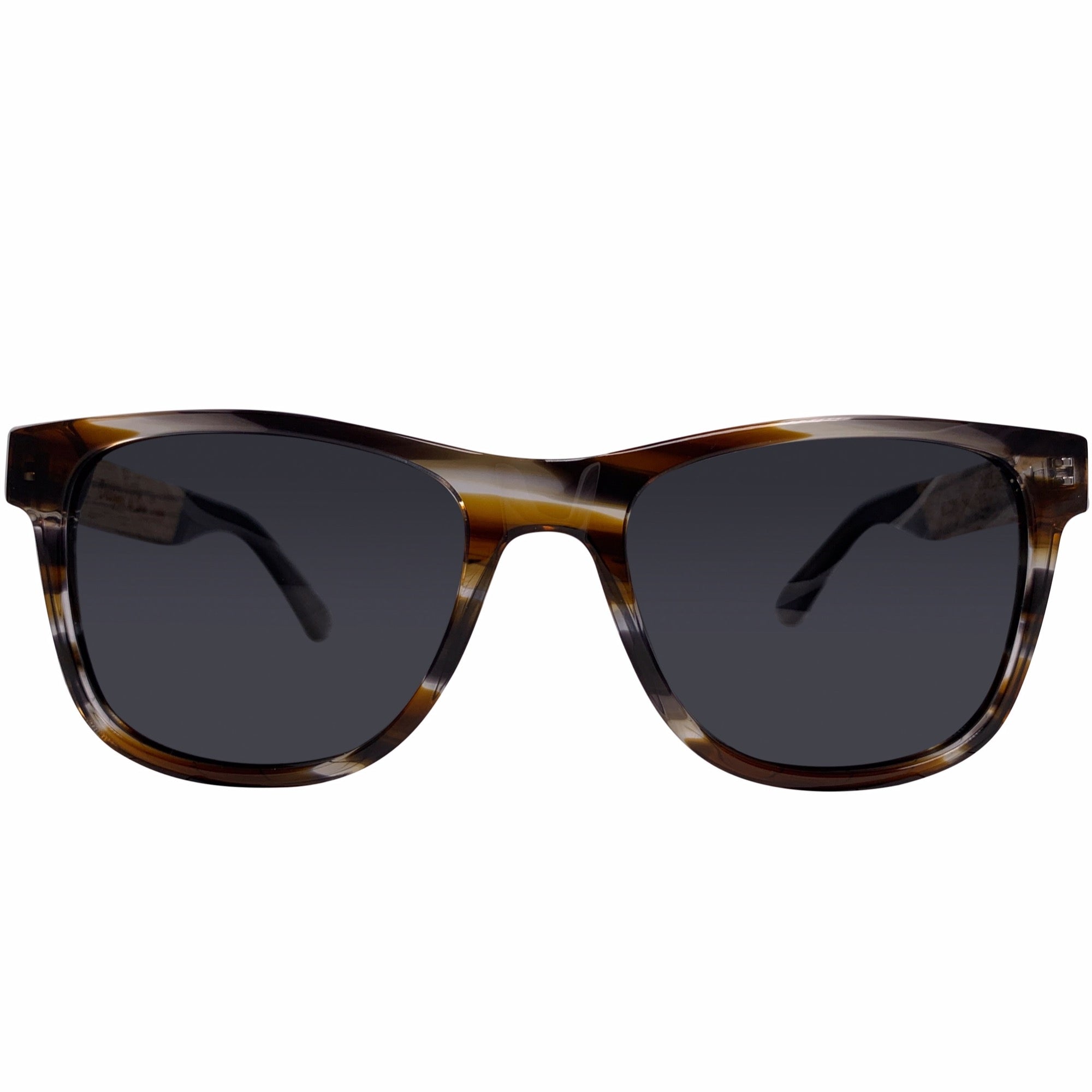

Polarized UV400 - real wood and bamboo - lifetime warranty - designed in California.